The Michael Jackson Motown 25 outfit — how to commission a real replica
On 25 March 1983 at the Pasadena Civic Auditorium, Michael Jackson performed "Billie Jean" wearing a black sequined Bill Whitten stage jacket, a white rhinestone glove, a black fedora, white socks pulled high, and black penny loafers. It is the single most-replicated stage outfit of the modern era. This is an honest guide to what each piece actually is, what to commission versus buy, what custom tailoring costs, and the mistakes most replicas make.
The cultural moment, briefly.
Motown 25: Yesterday, Today, Forever was a 25th-anniversary television special taped at the Pasadena Civic Auditorium on 25 March 1983 and aired on NBC on 16 May 1983. Michael Jackson's solo segment was "Billie Jean." Near the end of the performance he debuted the moonwalk in front of a national audience. The performance is now generally cited as the moment "Billie Jean" became a phenomenon and the moonwalk entered popular consciousness.
The outfit he performed in was designed by Bill Whitten (1933–2001), the costume designer behind decades of stage clothing for Lionel Richie, Earth, Wind & Fire, Diana Ross, the Commodores, and many others. Whitten ran Workroom 27 in Los Angeles. He designed Jackson's stage clothing through much of the early-to-mid 1980s, including the red leather Thriller jacket, the military-style jackets of the Victory tour, and this Motown 25 ensemble. The single white rhinestone glove became one of the most recognised pieces of stage costume of the 20th century.
The full outfit, piece by piece.
Seven components. Some are off-the-shelf. Some are commissioned. Knowing which is which is the difference between a credible replica and a costume-shop approximation.
01 · The jacket
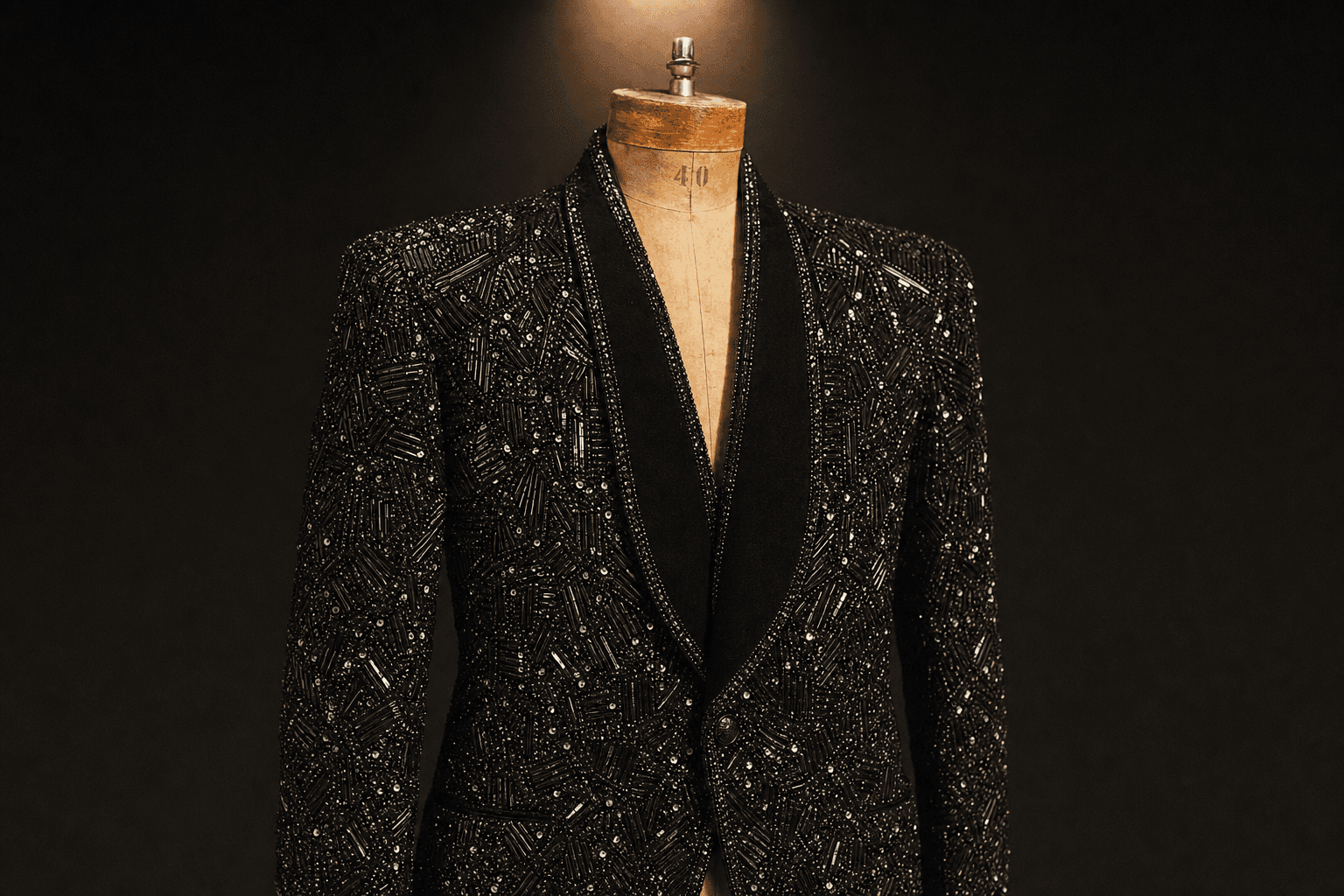
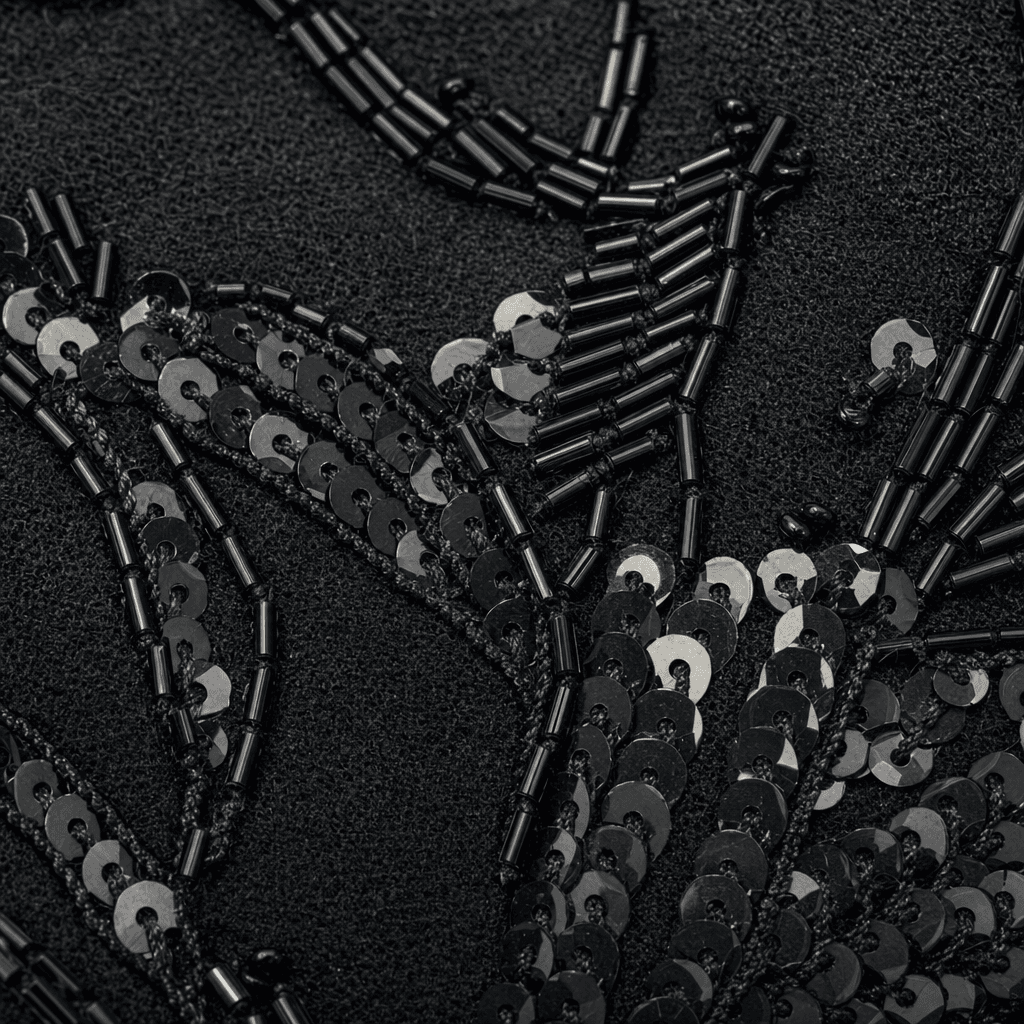
A single-breasted black wool jacket with notched (not peak) lapels, two-button front, structured shoulders, and side vents — a sharp 1980s stage silhouette. The drama is the surface: the entire jacket is densely covered in black bugle beads and black sequins, hand-applied over a black wool foundation. The beadwork is dense, not sparse — there is no visible wool between the beads on the front body. The original was heavy; modern replicas often use lighter foundation cloth to manage weight when the beadwork is added.
02 · The shirt
Black, with some shimmer. Most descriptions call it black satin; some describe a finely-sequined black knit. It sits subtly under the jacket — the jacket carries the visual weight. For a replica: a tailored black satin shirt or a fine-knit black turtleneck both work. The collar is open at the throat in most performance shots, with no tie.
03 · The trousers
High-waisted black wool, fitted through the leg, cropped just above the ankle bone — the cropped length is deliberate so the white socks are visible. Plain front (no pleats in most reference photography), no cuff. The waistline sits at natural waist, not modern low-rise. This rise + length combination is what makes the silhouette read as 1983 and not 2026.
04 · The glove
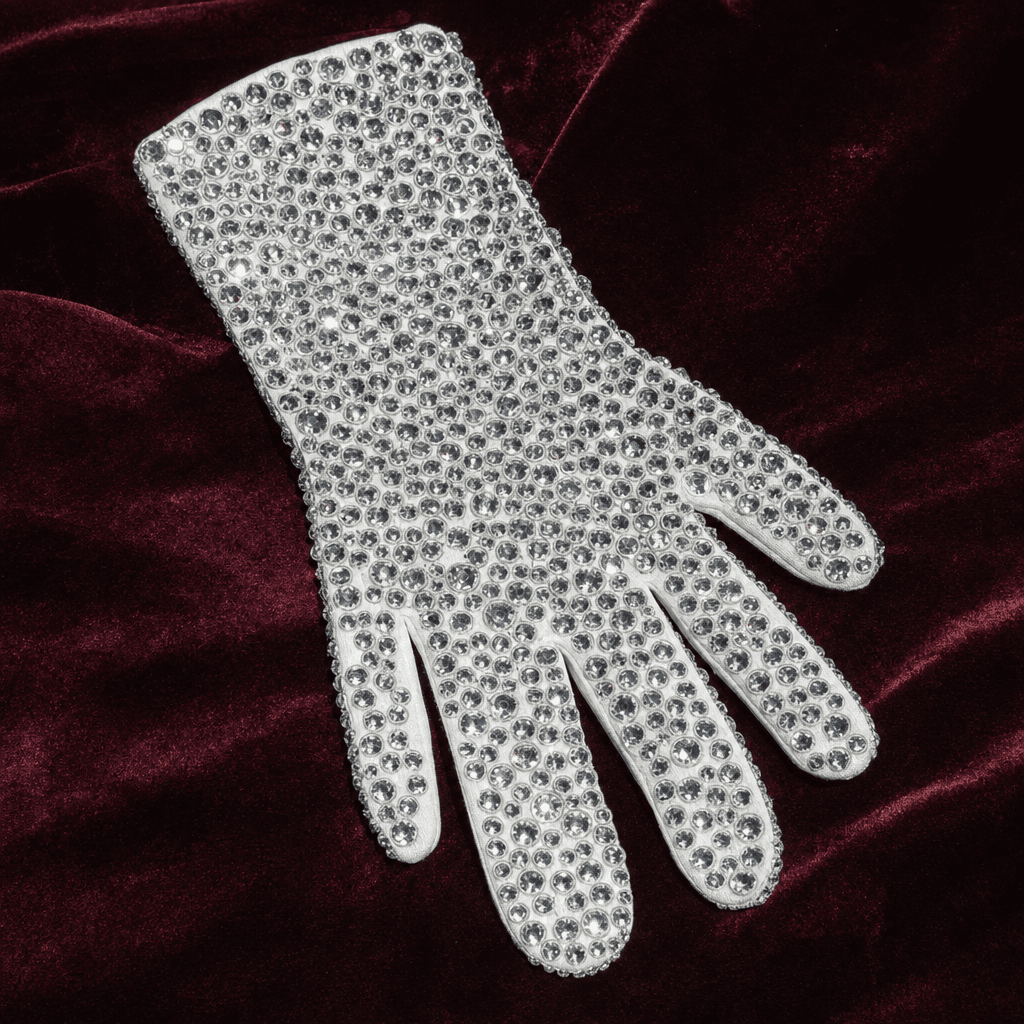
A single white cotton dress glove, worn on the right hand, entirely covered in clear rhinestones and crystals. The original was custom-made by Whitten's workroom. It is the most-replicated single accessory of the late 20th century — costume retailers sell rhinestone gloves in this style for US$50-200 depending on stone density and craftsmanship. The rhinestones should be densely applied, covering the cotton completely; sparse rhinestones read as a costume-shop knockoff rather than a serious replica.
05 · The fedora
Black wool felt fedora, brim around 2.25 inches, black grosgrain band. Worn through most of the performance, tipped and tilted at specific moments. Avoid wider-brim modern fedoras — the brim width is what distinguishes a 1983-correct fedora from a generic costume hat. Quality wool felt holds shape; cheap polyester fedoras collapse on camera.
06 · The socks
Plain white cotton ankle socks, worn pulled up so about three inches of white show above the loafer line. This is the styling decision that makes the moonwalk readable on camera — the eye tracks the contrast and the gliding motion becomes visible from a distance. Wearing the socks at normal modern length is the single most common replica mistake and the cheapest one to get right.
07 · The loafers
Black penny loafers. Florsheim Imperial Kenmoors are the historically-cited reference. Low heel, clean apron-toe vamp, leather sole. Modern Florsheim still produces a Kenmoor-style penny loafer; vintage examples turn up on resale sites. Avoid chunky-soled, square-toe, or branded modern loafers.
Custom tailoring vs Halloween costume shops.
There are three tiers of replica, and the gap between them is real.
Tier 1 — Halloween costume. A complete pre-made costume bundle from a party store: US$40–120. The jacket is screen-printed or sparsely sequined, the glove is novelty-grade, the fedora is polyester. Works for one Halloween. Photographs poorly even at arm's length, reads as costume from across a room. Fine if it's October 31st and you have a party that evening.
Tier 2 — Mid-tier costume specialist. A US$300-700 bundle from a serious costume vendor. The jacket has actual sequins applied (machine-embroidered), the glove has decent rhinestone density, the trousers are correctly cut. Works for tribute artists at the entry level, photographs reasonably on stage. Begins to fall short under high-definition video or close inspection.
Tier 3 — Tailored replica. A made-to-measure black wool jacket as the foundation (around US$300–700), shipped to a costume embroidery specialist for hand-applied bugle bead and sequin work (US$500–1,800 in beading labour alone), paired with made-to-measure trousers and shirt (US$200–500), plus the accessories. Total commonly US$1,300–4,000 depending on beading density and fabric tier. This is the version that reads correctly on stage under any lighting, holds shape across performances, and survives close-up photography. It is the version professional tribute artists commission.
The split where most replicas live: tier 1 for fans, tier 3 for professionals, very little in tier 2 because tier 2 tends to be the worst-value point — too expensive to be a costume, not good enough to be a stage replica.
What to commission, what to buy.
The honest breakdown by piece for a tier-3 replica.
Total range, tier-3 build: US$1,250 – US$3,860.
The four most common replica mistakes.
- 01Slim modern jacket cutA 2026-cut slim jacket reads wrong because the original silhouette is broader-shouldered with a higher armhole than current ready-to-wear. The cut is what carries the date.
- 02Under-beaded jacketThe original is densely covered. A jacket with visible black wool between sequins reads as costume; a jacket where the beads form a continuous shimmering surface reads as a replica.
- 03White socks at modern lengthSocks worn at normal length under the trouser break read as ordinary trousers. Pulled up so 3 inches of sock shows above the loafer is the styling that makes the moonwalk readable on camera. Cheapest fix on this list.
- 04Wide-brim fedoraThe original brim is around 2.25 inches. Modern costume fedoras default to wider brims (2.75"+), which throws the head proportions off and dates the look to a generic 1940s gangster rather than 1983 Bill Whitten.
What Nathan Tailors / RemoteSuit can make.
We are a made-to-measure tailoring atelier — wool jackets, trousers, shirts, cut to your measurements. That gives us the right scope for three of the four core garments in this outfit:
- — A made-to-measure black wool jacket in the correct 1983 silhouette (structured shoulder, high armhole, notched lapel, two-button, side vents). From US$129 in our entry tier; you would typically want the mid or premium tier for a stage garment that needs to hold shape under beadwork.
- — Made-to-measure high-waisted black wool trousers, cropped to the length the look requires. From US$59.
- — A made-to-measure tailored black shirt in satin or fine cotton. From US$49.
The dense bugle bead and sequin embroidery is specialty work outside our normal scope. We can construct the foundation jacket and ship it to a costume embroidery specialist of your choosing, or — for serious tribute-artist commissions — coordinate with a partner beader on your behalf. The glove, fedora, socks, and loafers are off-the-shelf or specialty-costume purchases best made from established costume vendors.
If you're a tribute artist or a serious replicator and you want to talk through the foundation garments, WhatsApp us — we'll work through the spec and timing.
Quick answers.
How much does it cost to commission a replica of the Motown 25 jacket?
A serious tailor-made replica jacket in the Bill Whitten style typically costs US$800-2,500 depending on the density of beadwork and quality of the foundation jacket. The dense black bugle beads and sequins are labor-intensive — that's where most of the cost sits. The black wool foundation jacket itself is the smaller half of the bill; hand-applied beadwork is the larger half. A full outfit (jacket, shirt, trousers, glove, fedora, socks, loafers) lands between US$1,300 and US$4,000 depending on which components you commission versus buy off the shelf.
What kind of jacket is the original Motown 25 jacket — the foundation under all those sequins?
A single-breasted black wool jacket with a fairly close, high-armhole cut typical of stage tailoring in the early 1980s. Bill Whitten built the jacket as a structured foundation, then the surface was densely covered in black bugle beads and sequins. The base silhouette is more 'sharp suit jacket' than 'tuxedo' — notched lapels (not peak), no satin facing, two-button front, side vents. The drama comes from the beadwork, not the cut.
Was Michael Jackson's Motown 25 jacket black or dark navy?
Black. Stage lighting and video tape from 1983 can make it read deep blue-black in some clips, but the foundation wool and the beadwork are both black. Modern replicas occasionally use a midnight-navy foundation for a slightly less flat read on camera; the original was black.
What about the shirt — was it sequined too?
The shirt under the jacket is black, with some surface shimmer (often described as black satin or a lightly sequined black knit). It's subtle compared to the jacket — the jacket carries the visual weight. For a replica, a tailored black satin shirt or a fine-knit black turtleneck both work. The collar is open at the throat in most performance shots.
Why are the white socks so prominent?
Deliberate styling. The white socks were worn above the loafer line — about three inches of sock visible above the shoe — specifically so the moonwalk would be readable on camera. The eye tracks the contrast between the high-waisted black trousers and the bright white socks, which makes the gliding motion of the feet visible from a distance. It is the single most copied 'small detail' of the outfit because it's the cheapest part to get right.
What shoes are correct for the replica?
Black penny loafers — Florsheim Imperial Kenmoors are the historically correct reference. A black slip-on with a low heel and a clean apron-toe vamp is the general silhouette. Modern Florsheim still makes a Kenmoor-style penny loafer; vintage examples turn up on resale sites. Avoid chunky-soled modern loafers, square-toe loafers, or anything with visible branding.
Can Nathan Tailors actually make this for me?
We can make the core garments — the structured black jacket, the high-waisted trousers, and the black shirt — to your measurements, in wool and satin appropriate to the original. The dense bugle-bead and sequin embroidery on the jacket is specialty work that is best handled by a costume embroidery specialist after the jacket is constructed; we can ship you the foundation jacket and recommend specialist beaders who do this work, or coordinate with a partner on your behalf. Glove, fedora, socks, and loafers are off-the-shelf or specialty costume purchases.
What's the most common mistake people make when replicating this outfit?
Three: (1) using a slim modern jacket cut instead of the slightly-fuller-shouldered 1983 silhouette, (2) under-beading the jacket (the original is densely covered, not sparsely sprinkled), and (3) wearing the white socks at normal length instead of pulled up high enough to be visible. The fourth most common is using a fedora that's too wide-brimmed — the original brim is closer to 2.25 inches, not the wider-brim look common in modern fedora retail.
On 25 March 1983, an outfit became iconic.
Bill Whitten built clothes that read from the back of a 1,300-seat auditorium and survive close inspection on 4K rescans forty years later. That's the bar a serious replica has to clear. Off-the-shelf costume bundles don't clear it. A made-to-measure foundation jacket paired with specialty beadwork does.
If you're commissioning the build, the four things that matter most: get the jacket cut right (1983 silhouette, not 2026), get the beading dense, get the socks pulled up, and get a fedora at the correct ~2.25" brim. The rest is sourcing.